

Twelve Blocks North: What Growth Actually Looks Like
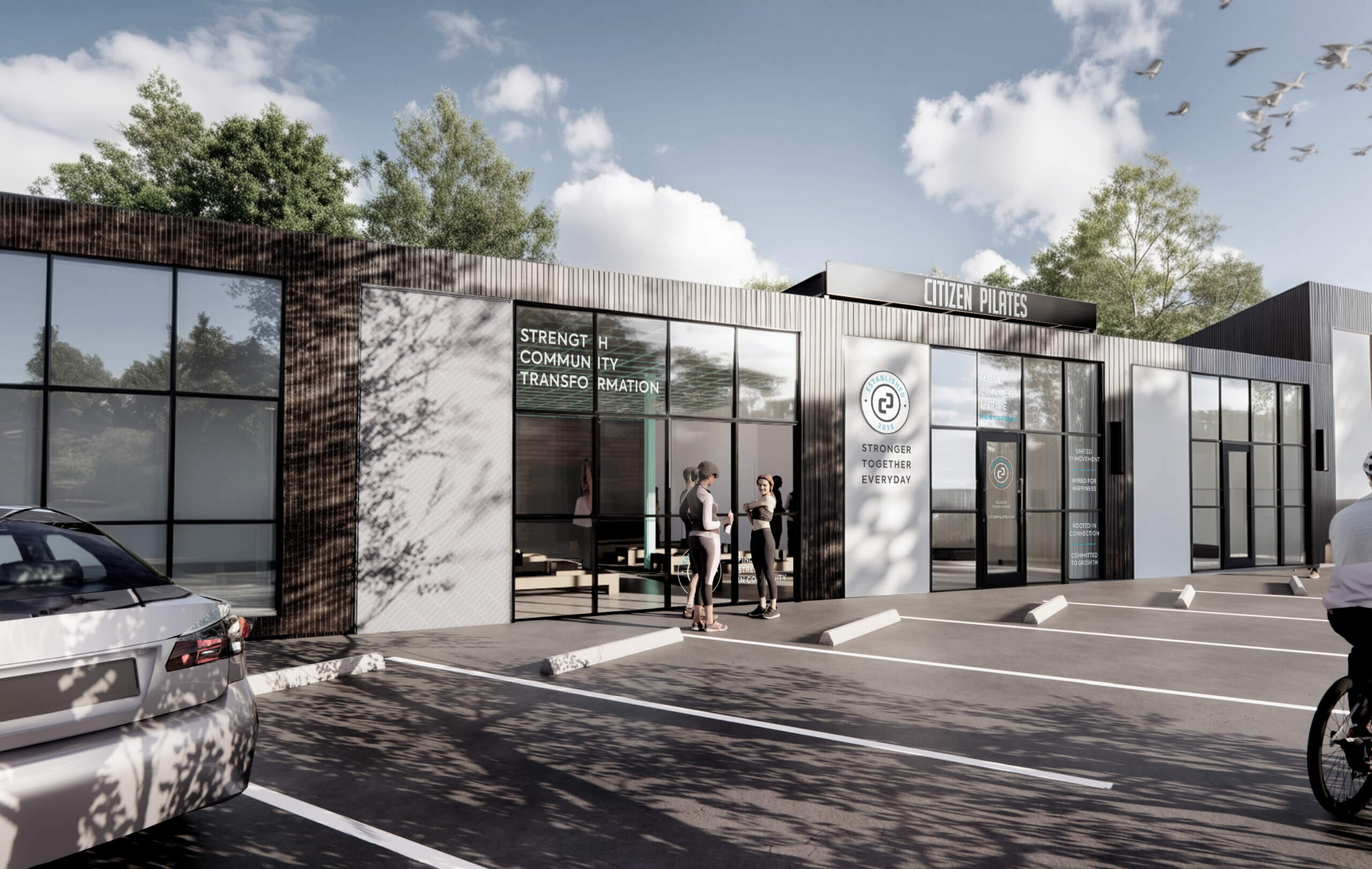
On Friday, July 31, we announced that Citizen Pilates was relocating its flagship Heights studio, a place we have occupied since 2017 and one that has become so intertwined with the identity of Citizen that I knew the announcement would carry some emotion.
We aren’t leaving the Heights, downsizing the business or changing the team and method that have grown inside those walls. We’re moving twelve blocks north, still very much in the same Houston neighborhood, into a larger studio that will allow us to increase from eight reformers to twelve and give a business entering its second decade the room it needs for what comes next.
The responses have been fascinating.
Some clients immediately understood what the announcement represented and told me how excited they were. Others said they were proud of us. One client wrote that Citizen was one of the best things that had ever happened to her and that she would follow us anywhere, which is the sort of sentence you don’t easily forget when you’ve spent eleven years building a company around the belief that people deserve to feel better when they leave than when they walked in.
The membership cancellations related to the move can be counted on one hand.
Then there have been the quieter questions, usually delivered with genuine concern: “Is everything OK?”
I understand the instinct behind the question because people become attached to places, particularly places that have become part of the architecture of their lives. Thousands of workouts have happened in that Heights studio, along with friendships, milestones, difficult mornings made better and completely ordinary Tuesdays that became meaningful simply because someone decided to show up.
What I find more interesting is the assumption underneath the question, because everything is more than OK.
We Know What Struggling Looks Like
We have become remarkably good at recognizing the visible signs of a small business in trouble. The hours start shrinking, employees disappear, maintenance gets deferred and eventually the paper goes over the windows, the sign comes down and a leasing banner appears on the building. We understand those signals because we’ve watched them happen countless times.
What we don’t see nearly as often is the financial evidence of a thriving independent business, because healthy balance sheets don’t announce themselves from the sidewalk.
“We know how to recognize the visible signs of a business in trouble. We are considerably less practiced at recognizing what a financially healthy small business looks like when it begins making bigger choices.”
There isn’t a sign on the front door telling you that payroll was comfortably met again this month, that the company continues to generate positive cash flow, that operating margins are strong or that management has deliberately built enough financial stability to make a major investment without needing that investment to rescue the existing business.
Perhaps that’s why, when an independent business makes a significant move, our minds naturally begin filling in information we cannot see. Maybe the rent went up. Maybe the studio isn’t doing well. Maybe they had to leave.
Or maybe you’re simply watching what a successful small business looks like when it reaches the point where standing still no longer makes much sense.
Eleven Years Changes the Math
There is a statistic repeated so often in entrepreneurial circles that it has almost become folklore: most small businesses fail within five years. The actual data are slightly different, although the long-term odds aren’t particularly comforting.
According to the U.S. Small Business Administration’s Office of Advocacy, an average of 48.9% of new employer establishments survived at least five years between 1994 and 2020, while only 33.7% survived ten years. More recent data from the U.S. Bureau of Labor Statistics tell a remarkably similar story: of the private-sector establishments born in March 2013, only 34.7% were still operating in March 2023.
Citizen Pilates turned eleven this summer.
By comparison, roughly one-third of U.S. private-sector business establishments survive for a decade.
Somewhere in the middle of those eleven years was also a global pandemic that temporarily made gathering people together in small rooms to exercise not merely unpopular, but impossible.
When someone hears that Citizen is relocating its original flagship and wonders whether something has gone wrong, I sometimes imagine the same story stripped of the familiarity that comes with being one of our clients.
Imagine someone in your family or close circle of friends built a company from scratch and made it through the precarious first five years, then ten. Along the way she created jobs and careers, signed leases, made thousands of payroll deposits, paid taxes, survived COVID, opened additional locations and somehow built something customers cared enough about to weave permanently into their weekly lives.
Now imagine that, eleven years later, the business had become financially strong enough to make its flagship larger, adding capacity for clients while creating additional opportunity for the people who work there.
Would you hear that story and assume something was wrong, or would you recognize what you were looking at?
Meanwhile, We’ll Drive Across Houston for a Haircut
There is another part of the reaction that makes me smile, particularly as a woman who lives in Houston and understands exactly how elastic our definition of “too far” becomes when we really want something.
We will drive forty-five minutes for the person we trust with our hair, cross town for the nail technician who finally figured out exactly how we like them, pass three grocery stores because Trader Joe’s has the thing we actually want, follow a dermatologist to her new office and willingly add twenty minutes to an errand because everyone knows there is somehow such a thing as the good Target.
Houston is a city where driving twelve blocks can take less time than finding a parking space once you arrive, yet when a business moves those same twelve blocks, the distance can suddenly feel monumental.
I don’t say that to dismiss anyone who prefers the convenience of our current location. Convenience matters, and every person gets to decide what works in her own life. What the remarkably small number of cancellations tells me, however, is that most of our clients understand that what they come to Citizen for isn’t contained within a particular set of walls.
“The Heights isn’t going away. It is growing up.”
Ask a Banker
Some of my favorite conversations about Citizen happen with clients who work in banking and finance, several of whom have had a ringside seat to this company for years and understand the business behind the reformers particularly well.
They know that a busy room doesn’t necessarily mean a healthy company, just as increasing revenue doesn’t necessarily mean increasing profitability. Growth can hide an extraordinary number of sins, and a beautiful storefront can sit on top of a very ugly balance sheet.
So when those clients ask me how Citizen is doing, I enjoy getting to speak their language.
Citizen Pilates Operating Margin
17.8%
Citizen Pilates is also cash-flow positive across an independent three-location operation.
Citizen operates cash-flow positive, and our operating profit margin is 17.8%. Published boutique-fitness benchmarks vary according to how companies define operating profit, EBITDA and net income, but industry reporting commonly places healthy boutique-studio profitability in the teens, making a 17.8% operating margin a meaningful measure of the strength of our underlying business.
The number becomes even more meaningful to me because Citizen isn’t a single studio tucked underneath somebody else’s corporate organization. We’re an independent, three-location company carrying our own leadership, administrative systems and operating infrastructure.
“The 17.8% isn’t the margin of one particularly successful room. It reflects the operating business.”
That distinction matters because we aren’t opening a larger Heights location to rescue the economics of another studio, nor are we chasing expansion simply because adding revenue makes for an impressive headline. The underlying business works, which is precisely what gives us the ability to decide where and how we want to invest in its future.
I recognize that talking publicly about operating margins and cash flow isn’t typical fitness-industry marketing, but perhaps that’s part of the problem. We talk endlessly about growth without talking about whether that growth is economically sound, and we celebrate new locations without asking whether the company opening them can actually afford to be there.
I would rather build the boring way.
Strong operations give us the ability to maintain beautiful studios, purchase equipment, compensate people, provide benefits, develop instructors, absorb increasing operating costs and make investments whose payoff doesn’t have to appear in the next thirty days. More importantly, financial stability gives us choices, and the Heights relocation is one of them.
The Difference Between Having to Move and Choosing to Move
There is an important distinction here that I think gets lost when people look at small businesses from the outside. Sometimes a company relocates because it has no choice: a lease becomes untenable, the economics stop working, the landlord has other plans or the business needs to shrink.
Sometimes a company moves because it has earned the ability to choose something better.
After nearly a decade in our current Heights home, eight reformers are no longer enough for what that studio has become. Our new Heights studio will have twelve reformers, which means four additional clients can get into every full class, waitlists will have more room to move and our instructors will have greater opportunity to build careers inside a company that continues to grow.
“We aren’t abandoning a room that failed us. We are leaving a room that worked so well that we outgrew it.”
That is a very different story.
What Comes After Scrappy?
We say we want small businesses to succeed. We encourage people to shop local, celebrate entrepreneurship and cheer for the founder willing to bet everything on an idea when nobody knows whether it will work.
There is enormous affection for the scrappy stage of a small business, perhaps because struggle makes for a compelling story. We talk considerably less about what happens afterward, when the company survives the first five years, makes it through ten, builds a team, learns how to generate sustainable profit and eventually has enough financial strength to make decisions based on opportunity rather than necessity.
At some point, remaining exactly as you were becomes more dangerous than changing.
Citizen has reached a few of those moments over the past eleven years, and every one of them has required us to decide whether we were more interested in protecting what felt familiar or creating room for what came next.
This time, what comes next happens to be twelve blocks north.
Yes, Everything Is OK
There is something genuinely touching about clients caring enough about Citizen to wonder whether we’re OK, and I would much rather own a company people care enough to worry about than one whose decisions barely register.
So I don’t dismiss the question. I simply want to answer it with the information that isn’t visible from the sidewalk.
Citizen Pilates is an eleven-year-old, independent Houston Pilates company with three locations. We are cash-flow positive, operate at a 17.8% operating profit margin and are relocating our flagship Heights studio twelve blocks north so that we can expand it from eight reformers to twelve.
We survived a pandemic that struck directly at the mechanics of our business, built a team with opportunities that didn’t exist when I opened the first studio and reached a stage where we are able to reinvest in the company from a position of financial health rather than financial necessity.
Sometimes the moving trucks aren’t a distress signal.
Sometimes they’re evidence that it worked.
And this time they’re only going twelve blocks north.
About the Citizen Pilates Heights Relocation
Is Citizen Pilates closing its Heights studio?
No. Citizen Pilates is relocating its flagship Heights studio approximately twelve blocks north within the same Houston neighborhood.
Why is Citizen Pilates moving its Heights location?
The relocation gives Citizen Pilates a larger flagship studio and increases class capacity from eight reformers to twelve.
Is Citizen Pilates financially healthy?
Citizen Pilates is cash-flow positive and reported a 17.8% operating profit margin for its independent three-location operation.
How long has Citizen Pilates been in business?
Citizen Pilates was founded in Houston in July 2015 and celebrated its eleventh anniversary in 2026.
How many Citizen Pilates locations are there?
Citizen Pilates operates three Houston-area studios: The Heights, Garden Oaks and Spring Branch.
Will memberships continue to work at the new Heights studio?
The relocation does not change the Citizen Pilates method, team or existing multi-location client experience. The new flagship is an expansion of the Heights studio, not a closure of the business.
Sources & Methodology
Business survival data: U.S. Small Business Administration Office of Advocacy, Frequently Asked Questions About Small Business, March 2023; and U.S. Bureau of Labor Statistics, Business Employment Dynamics establishment survival data.
Citizen Pilates financial data: The 17.8% operating margin and cash-flow characterization are based on Citizen Pilates internal company financials. Industry profitability comparisons should be viewed directionally because fitness-industry sources may use different definitions of operating profit, EBITDA and net profit.
U.S. Small Business Administration: Small Business Survival Data
U.S. Bureau of Labor Statistics: Establishment Age and Survival Data


