

Lagree vs Pilates: The Difference Nobody Wants to Say Out Loud
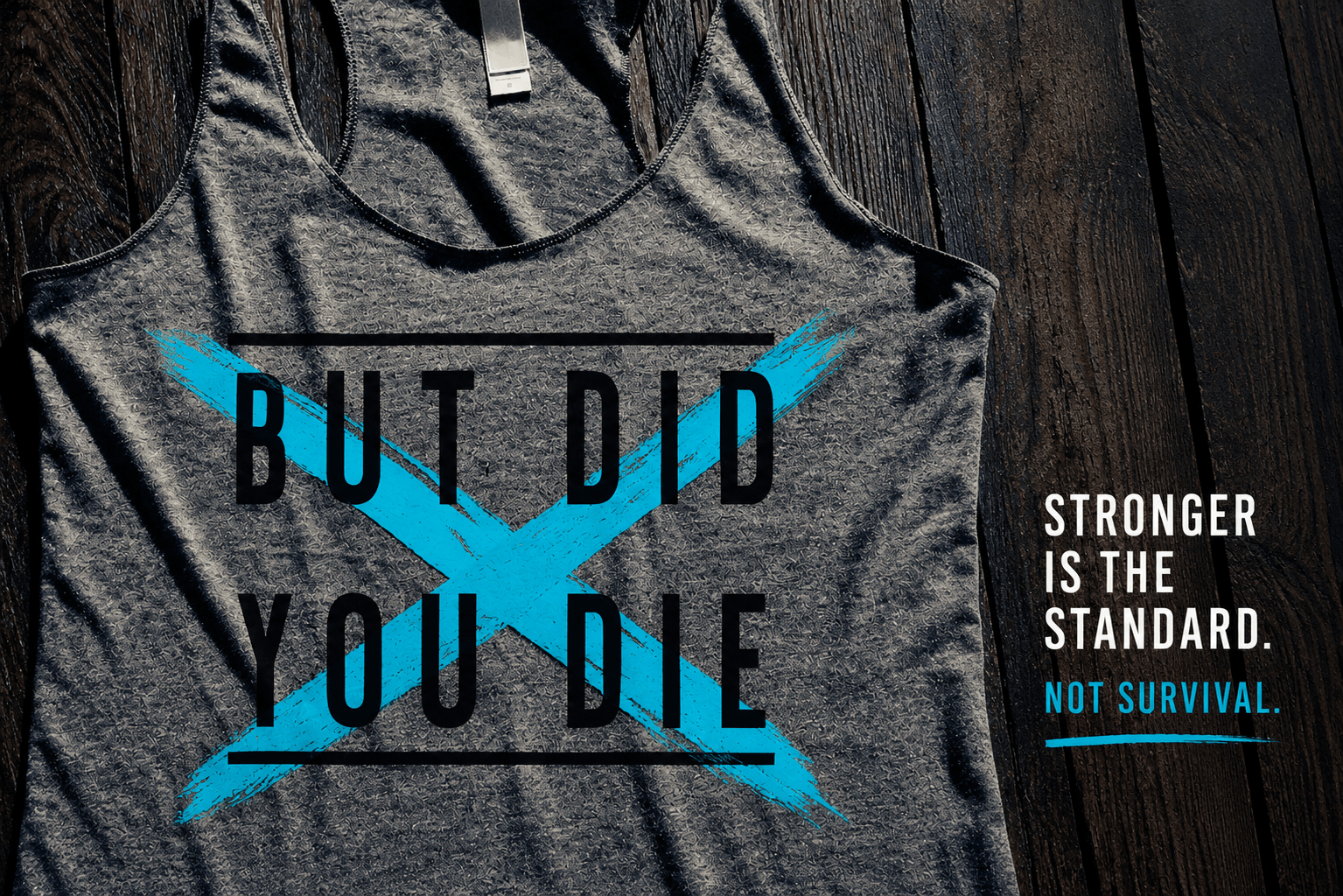
Across the front it read:
“But did you die?”
On the back was the logo of a Lagree studio.
And honestly? I couldn’t stop thinking about it.
Not because I was offended. Not because I suddenly felt threatened by another concept studio opening in Houston. After ten years in this industry, trust me, that phase of entrepreneurship has long passed.
But because that phrase represents something I have never wanted associated with Citizen Pilates or the kind of movement culture we’ve spent a decade building.
A workout making you feel wrecked is not the same thing as a workout making you stronger.
Somewhere along the way, the boutique fitness industry started romanticizing survival. The harder the class, the shakier your legs, the more destroyed you felt afterward, the more “effective” people assumed the workout must be. Exhaustion became branding. Suffering became personality. And if you questioned it, you were somehow accused of not wanting to work hard enough.
But after teaching thousands of classes and watching thousands of bodies walk through our studios, I’ve learned something that feels increasingly unpopular to say out loud:
A workout making you feel wrecked is not the same thing as a workout making you stronger.
And that distinction matters more than ever.
Because over the years, we’ve seen a noticeable number of clients come to Citizen after getting hurt elsewhere, particularly from high-intensity Lagree-style workouts taught in crowded rooms where one instructor is expected to manage 12, 14, sometimes 15 machines at once.
Again, this is not an attack on Lagree itself.
This workout absolutely works for many people.
This workout is also absolutely not for many people.
Both things can be true at the same time.
But here’s where the conversation gets uncomfortable.
A lot of consumers assume that because a studio has expensive machines, dim lighting, polished branding, and an instructor with a headset and stopwatch, they’re automatically receiving highly skilled movement coaching.
Those are not the same thing.
And in boutique fitness, we’ve gotten very good at confusing performance with expertise.
Because coaching movement well is slow work. It requires observation. It requires correction. It requires understanding compensation patterns, asymmetries, spinal mechanics, breath patterns, joint loading, progression, regression, and how bodies behave under fatigue.
Counting down loudly over music is not the same thing as coaching.
Neither is handing someone a weekend certification and a studio full of clients.
That may sound harsh, but after ten years in this business, I’m far less interested in protecting industry feelings than I am protecting people’s bodies.
And this is where the conversation about Lagree versus Pilates actually becomes important.
Because despite what social media often suggests, Lagree and Pilates are not interchangeable methods.
They simply are not trying to accomplish the same thing.
Is Lagree Pilates?
No.
Not “Pilates but harder.”
Not “extreme Pilates.”
Not “Pilates on steroids.”
They are entirely different systems with different philosophies, different intentions, and different demands on the body.
Pilates was created as a movement method designed to improve posture, balance, spinal alignment, coordination, deep core stability, and long-term movement quality.
At Citizen, this philosophy became the foundation for what we call The Citizen Method, our proprietary approach to reformer Pilates built around progressive strength, movement quality, intelligent sequencing, and sustainable results rather than intensity for the sake of exhaustion.
The Citizen Method was developed after years of teaching thousands of classes and observing something the fitness industry often overlooks: most people do not need more chaos layered onto their nervous system. They need better movement patterns, stronger foundations, and coaching that prioritizes longevity as much as performance.
Lagree, by comparison, evolved as a high-intensity muscular endurance workout centered around continuous tension and fatigue using the Megaformer machine.
That difference matters.
Because one system primarily asks:
How well can your body move?
The other often asks:
How long can your muscles tolerate intensity?
Those are fundamentally different goals.
The Boutique Fitness Industry Quietly Rebranded Fatigue as Expertise
This is probably the most honest thing I can say after a decade in fitness:
The industry became addicted to the optics of hard work.
Shaking.
Sweating.
Collapsing after class.
“Barely surviving.”
It photographs well. It markets well. It creates viral moments online.
But muscular fatigue alone is not proof of intelligent programming.
And for many people, especially already stressed, inflamed, sleep-deprived adults juggling demanding lives, more stress layered onto the nervous system is not always the answer.
Sometimes the most transformational thing a body can experience is stability, breath, alignment, intentional progression, and movement that restores instead of punishes.
That philosophy is deeply embedded into how we teach Pilates at Citizen, particularly for clients rebuilding strength after injury, burnout, or years of high-intensity training.
That same thinking shapes how we onboard new clients walking into a reformer studio for the first time.
Because contrary to what fitness culture often promotes, harder is not automatically smarter.
Megaformer vs Reformer: Why the Difference Matters
To consumers, the machines can look similar enough that the methods get lumped together online.
Springs.
Straps.
Sliding carriage.
Low-impact movement.
But visually resembling something does not make it philosophically identical.
The Pilates reformer was designed to support precision, adaptability, rehabilitation, movement quality, and balanced muscular development.
The Megaformer was designed to maximize muscular fatigue, endurance, continuous tension, and intensity under load.
Neither machine is inherently bad.
But pretending they create the same experience for the body is intellectually lazy and increasingly misleading to consumers trying to decide what kind of movement practice actually supports their long-term health.
The Business Model Behind Lagree Matters Too
This is another part consumers rarely see.
Lagree is not simply a workout method. It is also a licensing ecosystem built around proprietary machines, certifications, and brand licensing agreements.
And with enough capital, financing, and the ability to secure expensive equipment packages, almost anyone can theoretically open a Lagree-style studio.
That doesn’t automatically mean the coaching inside that room is poor.
But it absolutely means consumers should understand this:
Expensive equipment is not the same thing as deep movement education.
Because what ultimately protects clients is not branding.
It’s coaching quality.
It’s class size.
It’s intelligent programming.
It’s instructor education.
It’s whether someone is actually watching how your body moves under fatigue.
That part matters enormously.
Especially when intensity enters the equation.
What Makes The Citizen Method Different?
While many boutique fitness concepts prioritize intensity, The Citizen Method prioritizes progression.
Our approach to reformer Pilates was built to help clients develop strength that translates outside the studio through intentional programming, thoughtful sequencing, movement education, and consistency over time.
Because sustainable strength is not built through chaos.
It is built through repetition, coaching, awareness, and movement patterns your body can actually maintain long term.
If you want to better understand the philosophy behind how we teach, you can explore The Citizen Method here.
Why Pilates Has Lasted More Than 100 Years
Fitness trends come and go in waves.
Bootcamps.
Spin.
HIIT.
Barre.
Circuit training.
Megaformer studios.
Every era promises harder, faster, more burn, more intensity.
And every few years, the industry rediscovers something shocking:
People’s joints matter.
Pilates has endured because it was never built around adrenaline.
It was built around movement quality.
And movement quality ages remarkably well.
After ten years at Citizen Pilates, I’ve become far less interested in what feels hardest for 45 minutes and far more interested in what still feels good ten years later.
That’s the kind of strength we believe is actually worth building.
Ready for Pilates That Supports Your Body Long-Term?
If you are looking for reformer Pilates in Houston that prioritizes smart coaching, sustainable strength, and movement that actually translates outside the studio, we’d love to welcome you to Citizen Pilates.
Start with our new client offers and experience the Citizen difference for yourself.


